



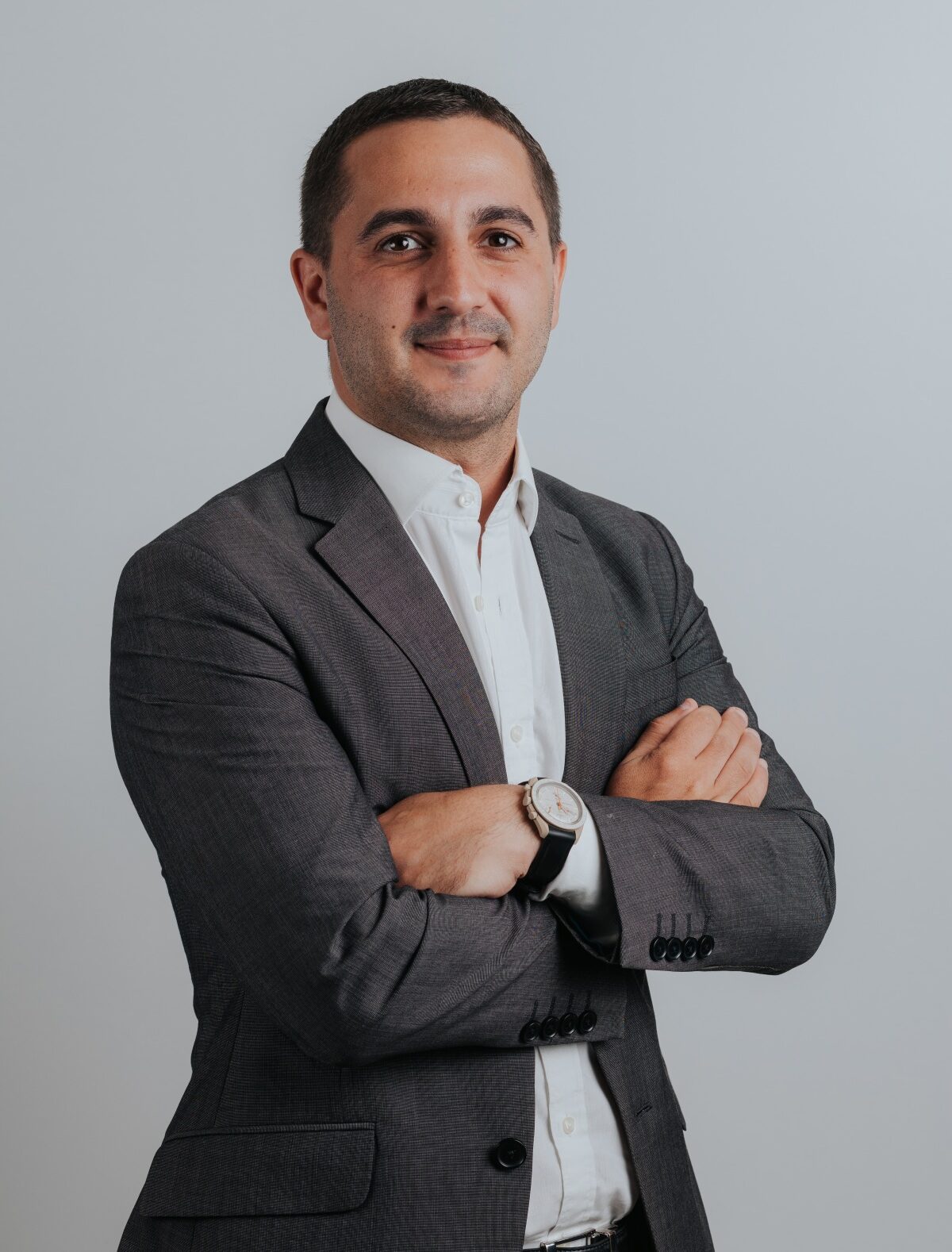
Meet Isaac Sammut Satariano
As Head of Business Development and Markets at CLA Malta, an established corporates services firm, Isaac Sammut Satariano helps prospective clients seeking to invest in Malta to find their feet and position themselves for strategic growth.
In 2025 there was a noticeable increase in interest from tech companies and firms operating in the regulatory field, particularly payments and fintech.
What are the main advantages Malta brings to the table for prospective investors, and what challenges are such investors likely to face?
Malta’s unique allure stems from its compact size, willingness to adapt to the digital era and an attractive corporate tax environment. These elements foster a business-friendly ecosystem that draws a wide array of investors. Other core advantages are the presence of specialised talent and reputable service providers, and the ability for investors to operate cross-border with assurance.
On the other hand, Malta’s cost-competitiveness for setting up and maintaining a business is perhaps no longer as strong a value proposition as it was before, mostly as a result of increased regulation, tightened due diligence and compliance requirements, and consequently higher professional fees. While this may sound like a hurdle to investment, I believe it has attracted a new cohort of clients that value expertise, guidance and results, thereby leading to clients with better projects and more profitable, sustainable business models.
Have there been any shifting trends in the last 12 months when it comes to the type or number of companies choosing to set up in Malta?
In 2025 there was a noticeable increase in interest from tech companies and firms operating in the regulatory field, particularly payments and fintech. Additionally, more traditional industries, such as renewable energy and green technology, are gaining traction, reflecting a global trend towards more sustainable investment strategies. In terms of numbers, there has been a consistently upward trend in the number of companies choosing Malta to set up their operations, many of which are drawn by Malta’s attractive fiscal conditions.
With plans for a global minimum tax rate seemingly on the rocks as interest declines, what do you tell clients who may be worried about its impact?
Clients value transparency, rather than a wait-and-see approach. Legal changes enacted in 2025 introduce an option for companies and certain trusts to apply a final tax rate of 15 per cent as an alternative to the long-standing imputation system. What this essentially means is that companies may continue operating under Malta’s full imputation system or elect into the 15 per cent final tax regime. What we provide to our clients who want to fully understand the impact of such new regulations is a thorough evaluation of the potential benefits and implications under both regimes by looking at comparative modelling of tax liabilities, impact analysis and advisory support.
Based on your expertise, what advice would you offer to prospective investors?
Through my line of work, I come across a lot of investors who would have already made the decision to set up in Malta without the correct analysis, knowledge or awareness, often resulting in missed opportunities or misinformed business decisions. My advice is to engage with advisors that fully understand the regulatory framework, that understand the compliance requirements and industry regulations specific to a given sector, and that are able to leverage tax optimisation and enhance investment profitability, whilst at the same time having the credibility to engage with Government entities and local business networks to gain insights into the market and consider scalability and future expansion opportunities. In a nutshell, working with the right advisory and financial partner is crucial.
Industry Key Players


Written By Robert Fenech
Online Business Editor
Robert is curious about the connections that make the world work, and takes a particular interest in the confluence of economy, environment and justice. He can also be found moonlighting as a butler for his big black cat.

Continue Reading



Malta’s Economic Sectors