


 Latest News Goldman Sachs-owned Maltese telecoms firm set to acquire competitor from Monaco Telecom
 Goldman Sachs-owned Maltese telecoms firm set to acquire competitor from Monaco Telecom
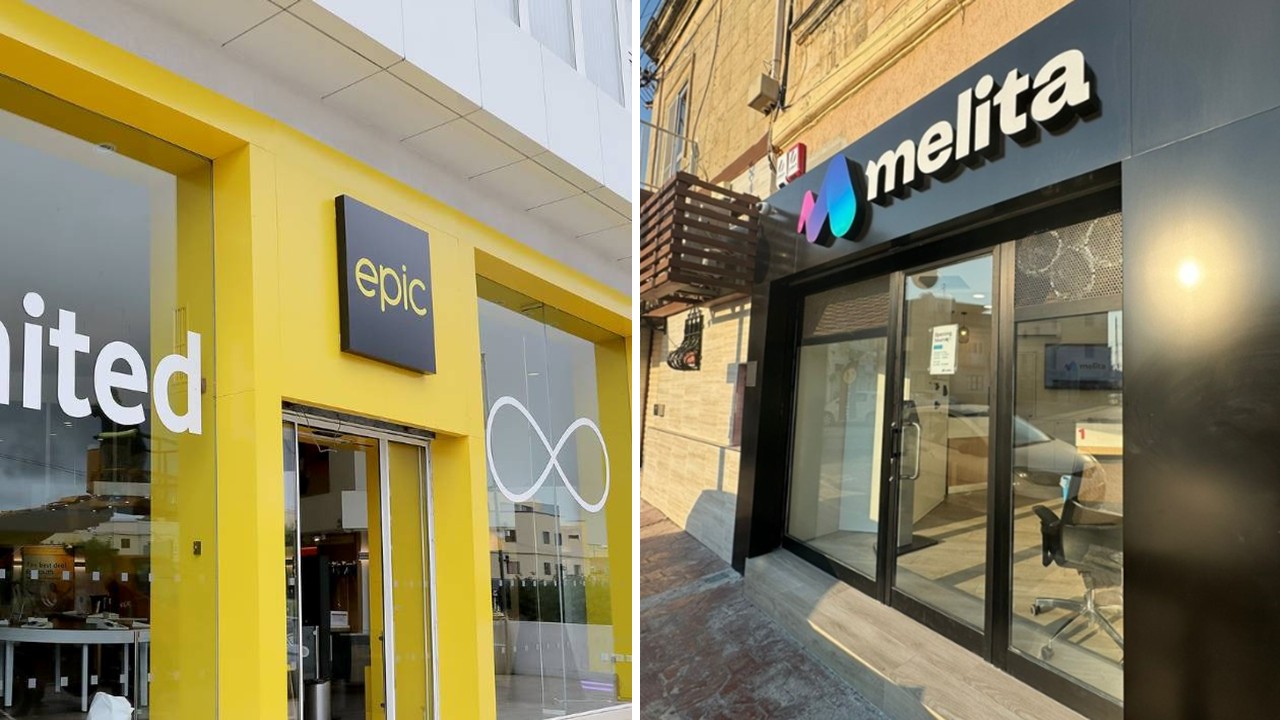
Melita and Epic are two of the three telecommunications companies in Malta, and they could be merging

Written By Nicole Zammit
Published on 16 September 2026
•
4 min read
Share





Malta’s telecommunications market could be heading for a significant consolidation after Melita Limited and Epic Communications Limited announced an agreement to combine their operations, potentially leaving the island with two major telecoms providers.
Under the proposed transaction, Melita will acquire 100 per cent of Epic’s shares. The deal remains subject to customary merger control and other regulatory approvals, meaning the two companies will continue operating and competing independently until the necessary clearances are obtained.
Melita is one of the country’s longest-established telecommunications operators. Founded in 1992, it provides broadband internet, television, mobile and fixed-line telephone services, with its services reaching more than 75 per cent of Maltese households.
The company has also attracted significant international private capital over recent years.
In 2019, investment firm EQT acquired Melita. EQT is a major international investment organisation which, at the time, had raised more than €61 billion across 29 funds and had a further €40 billion in assets under management. Its portfolio companies across Europe, Asia and the US generated combined sales exceeding €19 billion and employed approximately 110,000 people.
Melita subsequently changed hands again in 2025, when it was acquired by Goldman Sachs Alternatives.
Epic, meanwhile, is another established player in Malta’s mobile and telecommunications sector. It has been owned by Monaco Telecom since 2020 and operates mobile and fixed connectivity services for consumers and businesses.
Monaco Telecom is owned by NJJ Holding and the Government of Monaco.
The proposed transaction would therefore bring together two operators backed by major international investors.
The other major player is GO plc, a company listed on the Malta Stock Exchange.
GO competes across fixed and mobile telecommunications, broadband and television services and has expanded beyond Malta through investments in other communications and technology businesses.
Should the Melita-Epic transaction receive regulatory approval, Malta’s telecommunications landscape would consequently become considerably more concentrated, with only two major providers competing across the country's fixed and mobile communications market.
For investors, this makes the regulatory assessment of the transaction particularly significant. Malta is a small market of just over half a million residents, meaning telecommunications operators must spread substantial infrastructure expenditure across a comparatively limited customer base.
Melita and Epic themselves highlighted scale as one of the central rationales behind the transaction.
“The move will bring together two network operators with complementary strengths to deliver better services and more choice for customers and support the long-term development of Malta’s digital infrastructure,” the companies said.
They argued that growing demand for faster connectivity, resilient infrastructure and advanced cybersecurity capabilities is increasing the investment required from telecommunications providers.
“This level of sustained investment is only achievable where organisations meet a certain size. A combined business will be better equipped to meet those needs, investing in enhancing network and service quality across both fixed and mobile at a pace and scale that would be more difficult to achieve independently in a small country like Malta,” they said.
Melita CEO Harald Roesch similarly framed the proposed combination around the investment required to maintain Malta's telecommunications infrastructure.
“At the heart of this agreement is investing in the connectivity Malta depends on. Malta needs serious, sustained investment in its digital infrastructure, and that is harder for smaller operators to fund on their own,” he said.
“Our companies have complementary strengths, with leading networks in fixed and mobile. Bringing them together is about building something better for our customers and for Malta.”
Epic CEO Pierre-Etienne Cizeron described the agreement as an “important milestone for Malta's digital future”, arguing that combining the companies would create a provider with greater capacity to invest in networks, digital services and customer experience.
The transaction will now face regulatory scrutiny before it can proceed.
Share
Written By Nicole Zammit
Business Journalist
When she’s not writing articles at work or poetry at home, you’ll find her taking long walks in the countryside, pumping iron at the gym, caring for her farm animals, or spending quality time with family and friends. In short, she’s always on the go, drawing inspiration from the little things around her, and constantly striving to make the ordinary extraordinary.

Continue Reading




Malta’s Economic Sectors