



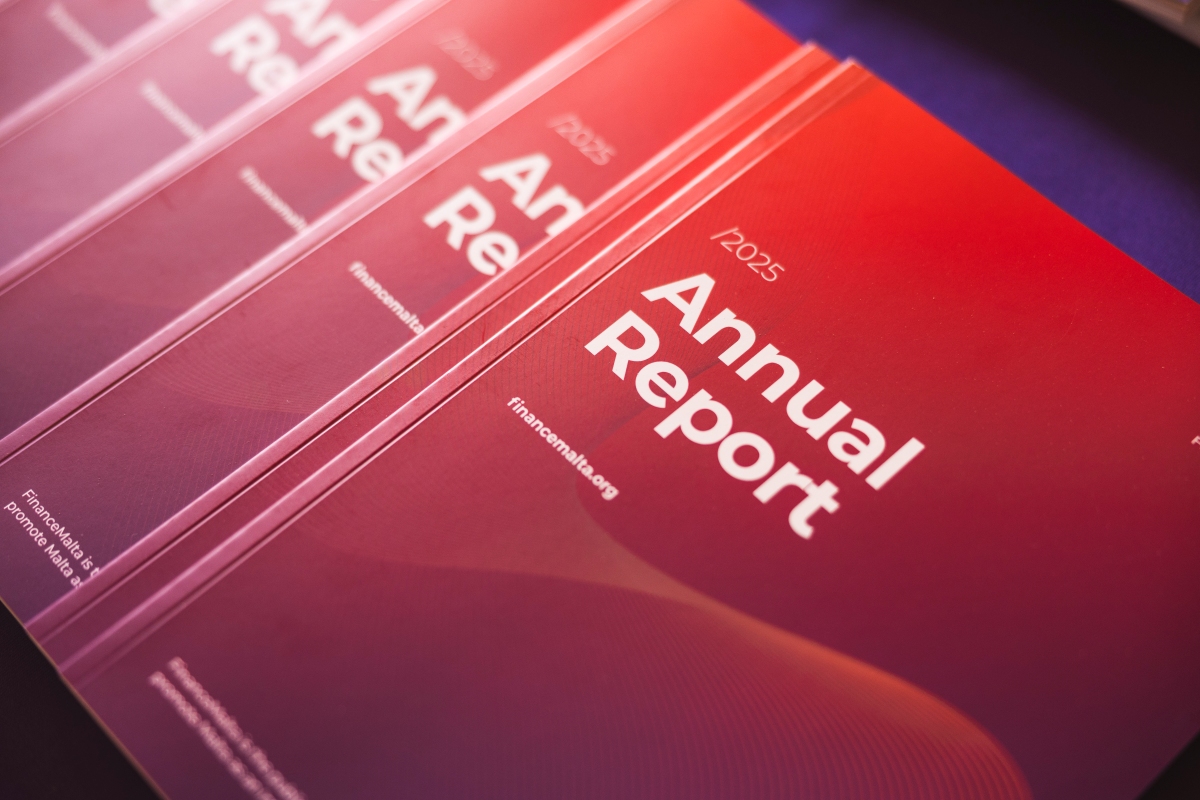
FinanceMalta charts shift towards quality over scale in 2025 Annual Report
Following FinanceMalta’s 2025 Annual Report, Chief Strategy Officer Dr Bernice Buttigieg discusses the sector’s shift towards quality, resilience and a broader role within Malta’s financial services ecosystem

Written By Edward Bonello
Published on 15 September 2026
•
5 min read
Share





Malta's financial services industry remains, in the words of Dr Bernice Buttigieg, Chief Strategy Officer at FinanceMalta, a resilient pillar of the national economy, underpinned by regulatory expertise, a skilled workforce and strong international connectivity.
With the FinanceMalta's 2025 Annual Report, being recently published, Dr Buttigieg describes a sector entering a new phase defined less by volume than by the quality of what it builds. “The next phase of Malta's financial services journey will be shaped by quality, specialisation and long-term value creation,” she said.
“Continued competitiveness will depend on sustained investment in expertise, innovation, talent and technology, alongside Malta's ability to attract sustainable, high-quality investment.” That performance held up throughout 2025 despite a more complex international backdrop, according to Dr Buttigieg, who pointed to a clear shift towards higher-value activity across the industry.
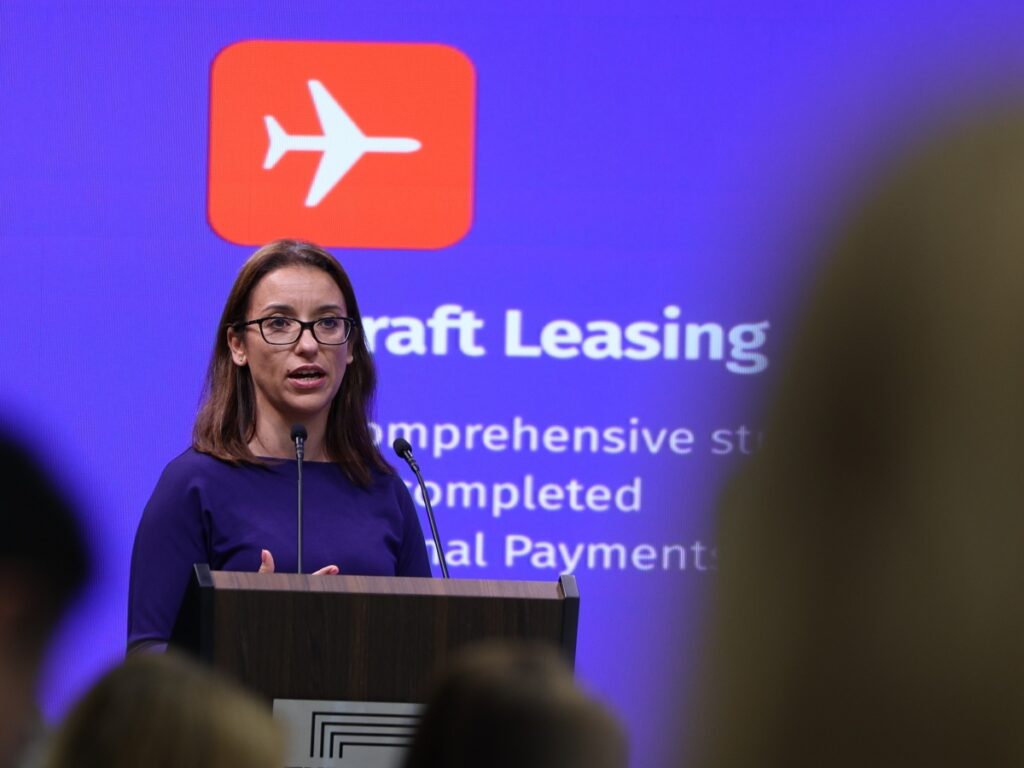
“What stands out is a continued shift towards higher-value activities, with businesses increasingly focusing on areas such as fintech, RegTech, AI-driven solutions, sustainable finance and other specialised services,” she explains.
She also highlights the Malta Financial Services Authority's recent publication of the proposed ‘Rulebook for Aircraft Financial Leasing Companies’ as a concrete step towards a longstanding ambition of becoming a specialist aircraft finance leasing hub. “This reflects a maturing industry where long-term competitiveness will depend not just on growth, but on expertise, innovation and the ability to deliver trusted solutions to international markets.”
This maturing outlook lies behind FinanceMalta's own repositioning, away from volume and towards quality, resilience and long-term sustainability. “The sector is now at a stage where sustainable success will depend mostly on creating value rather than simply expanding scale,” Dr Buttigieg says, noting that financial centres worldwide are competing for the same pool of quality investment, expertise and talent.
Malta's task, according to Dr Buttigieg, is to keep demonstrating why it remains an attractive destination for international business, “by focusing on the strengths that have supported the industry's success while continuing to strengthen specialist capabilities, investing in talent, encouraging innovation and maintaining the regulatory standards and reputation that have built confidence among international investors.”
FinanceMalta's own role has also shifted alongside the sector it represents. Originally established to promote and coordinate the industry, the organisation has, in Dr Buttigieg's words, evolved into something considerably broader.
“International promotion remains an important part of our mandate, but our contribution extends much further by facilitating collaboration across Malta's financial services ecosystem,” she says describing FinanceMalta today as a facilitator connecting industry participants, regulators, policymakers and educational institutions around shared priorities. She links this evolution directly to the pace of change the sector is navigating, noting that the approach has become increasingly important “as the sector adapts to evolving regulation, technological change, talent needs and shifting investor expectations.”
Talent, in particular, is emerging as one of the defining challenges for the sector's future, and it is here that FinanceMalta's recent collaboration with the University of Malta comes into play. “The joint talent mapping exercise is intended to build a clearer picture of the skills the industry actually needs. It will help provide a clearer picture of what skills the industry needs, where the gaps are, the challenges around recruitment and retention, and how international talent can support more specialised roles,” she says.
Dr Buttigieg expects the findings to feed directly into policy, giving both policymakers and industry leaders “a stronger basis for future decisions, helping ensure that education, training, workforce planning and immigration policies keep pace with the sector's growth.” Building and retaining the right expertise, she adds, will be critical to Malta's continued ability to attract quality investment and remain internationally competitive.
FinanceMalta's collaboration with the Malta Financial Services Advisory Board (MFSAC) forms another key part of this picture. Dr Buttigieg describes the relationship between the two bodies as a close one, built around a clear division of focus.
“FinanceMalta and the Malta Financial Services Advisory Board are working very closely to support and give better direction as to how we would like this sector to evolve,” she says. While FinanceMalta concentrates on industry engagement, international promotion and stakeholder coordination, MFSAC provides the strategic framework through which the sector's long-term strategy is implemented, translating industry priorities into initiatives focused on innovation, talent development, regulatory effectiveness and Malta's international positioning.
“This collaboration is essential in ensuring that Malta continues to respond effectively to the developments in the sector and to new opportunities and challenges.”
Looking ahead, Dr Buttigieg sets out a clear strategic direction for both FinanceMalta and the wider industry. “The objective is to continue reinforcing Malta's position as a high-value, specialised and internationally recognised financial services jurisdiction,” she says, as she lists sustainable and quality investment, stronger international engagement, addressing talent requirements, and supporting innovation across fintech, artificial intelligence and RegTech among the sector's key priorities.
Achieving this, she stresses, will depend heavily on continued cooperation between government, regulators, industry participants and other stakeholders, an alignment she described as already largely in place. “We all seem united in the ambition to ensure that Malta remains recognised internationally as a trusted, innovative and competitive financial centre that continues to create sustainable value for the economy,” she concludes.
Share
Written By Edward Bonello
Edward Bonello is a content writer, PR consultant and generally chill fellow. When he’s not happily tapping away at his laptop, he enjoys collecting useless trivia, watching B-movies, and cooking the most decent carbonara this side of Trastevere.


Continue Reading




Malta’s Economic Sectors