



Inside the unified strategy propelling Malta’s financial services into the future
‘The journey is not complete, but the foundation is solid, the progress is undeniable and the collective will is unwavering,’ says FinanceMalta Chief Strategy Officer Bernice Buttigieg

Written By Sarah Muscat Azzopardi
Published on 27 February 2026
•
7 min read

Share





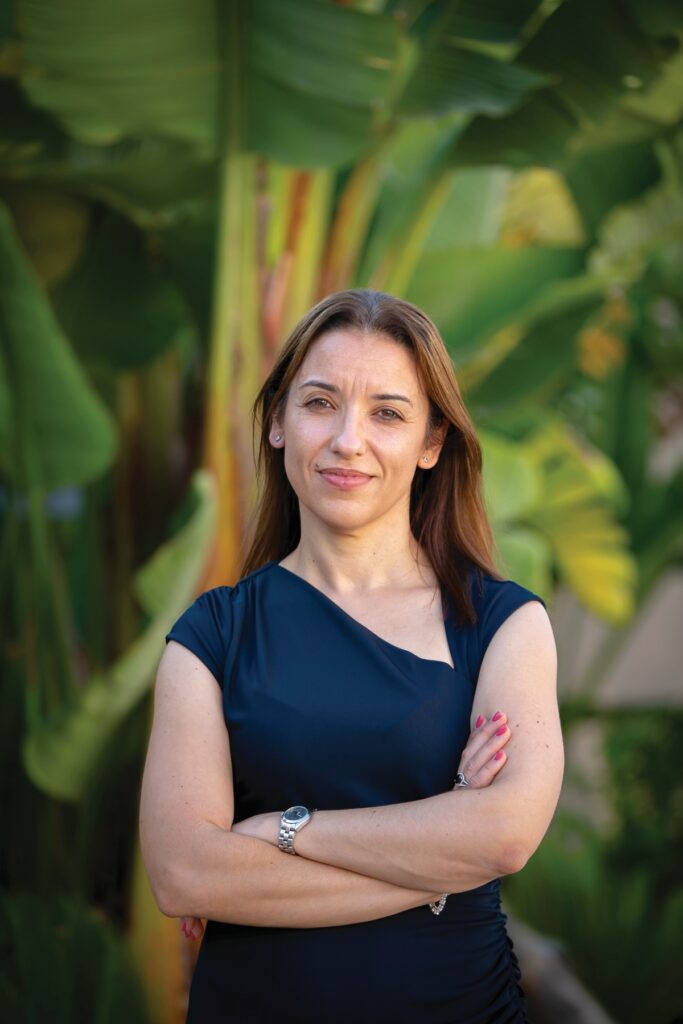
With a deep understanding of both the intricate details of the MFSAC strategy and the nuances of the global market, FinanceMalta’s Chief Strategy Officer Bernice Buttigieg is uniquely positioned to articulate the narrative of Malta’s financial services transformation.
For Dr Buttigieg, the sector’s current energy is the direct result of a meticulously crafted and collaboratively executed national strategy. Launched in March 2023, the strategy, she explains, has “become the bedrock upon which we are building a more agile, specialised and competitive financial jurisdiction.”
The strength of this strategic framework, she begins, lies in its profoundly collaborative origin. It was not conceived in a boardroom vacuum but was instead born from an “unprecedented collaboration between over 120 industry professionals, regulators and Government representatives.” This collective expertise was harnessed to tackle the industry’s most pressing challenges and to position Malta to seize emerging opportunities. Apart from that, the initial phase was an expansive exercise in ideation. “What began as 175 ideas,” she reveals, “was consolidated into a masterplan of 76 core projects.”
This process was guided by five foundational principles, each chosen to instil a specific discipline into the jurisdiction’s future growth: Speed, Standards, Simplification, Specialisation, and Sustainability. Moreover, these pillars were not abstract ideals, but a direct response to the demands of the modern financial world. The result, Dr Buttigieg says, is a comprehensive, multi-layered strategy structured around four key areas of focus: enhancing established industry verticals; driving forward-looking transformational initiatives; cultivating new areas of specialisation; and strengthening the critical horizontal enablers that support the entire ecosystem.
The progress has been both swift and substantial. “As we approach the strategy’s third anniversary, the results are tangible,” confirms Dr Buttigieg. “With 29 projects successfully completed and an overall completion rate of 66 per cent across various workstreams, the strategy is demonstrating robust momentum.” Indeed, key verticals like asset management and insurance are now considered essentially complete in terms of the strategic initiatives planned, while the more ambitious projects are well into their implementation, systematically making it “easier, simpler and more efficient to do business in Malta,” she maintains.
A core tenet of the strategy is specialisation – that is, identifying and dominating high-value niches. The development of a compelling proposition for family offices serves as a perfect case study. Here, the MFSAC finalised all regulatory changes with the Malta Financial Services Authority (MFSA) and the Financial Intelligence Analysis Unit (FIAU) to create a refined framework. This includes innovative features like Notified Professional Investor Funds (NPIFs) that allow for rapid registration, all set against an efficient tax landscape and a robust supporting ecosystem.
Once this sophisticated product was finalised, the symbiotic relationship between policy and promotion became clear. “FinanceMalta’s role was to take this completed product to market,” Dr Buttigieg explains. “We finalised the marketing brochures, made them available on our website, and embarked on a focused international promotional tour, with events in Switzerland, London and Riyadh, while also inviting a group of family offices to Malta.” This direct channel ensures strategic deliverables effectively reach their intended global audience.
The same focused approach is being applied to aircraft finance leasing. “Recognising a global market poised to exceed $550 billion by 2035,” Dr Buttigieg states, “the MFSAC has largely finalised a specialised legislative framework for this sector.” And FinanceMalta is now packaging this offering, highlighting powerful benefits such as the absence of withholding tax, the availability of notional interest deduction, and Malta’s highly efficient fiscal system to position the island as a premier jurisdiction for this high-value industry and a forward-looking testbed for innovation.
Certainly, an exceptional strategy is only effective if its message resonates in the global marketplace. This is the indispensable role of FinanceMalta. “As a public-private initiative, FinanceMalta is the conduit through which the MFSAC’s achievements are translated into global market appeal,” Dr Buttigieg affirms. The organisation’s mission is multifaceted: “to promote Malta as a leading international financial hub, provide a platform for networking and collaboration, support businesses establishing a presence here, and champion emerging sectors.”
A cornerstone of this promotional effort is the FinanceMalta Annual Conference. The 17th edition in 2024 centred on the theme of empowering financial services and broke attendance records with over 700 delegates. Dr Buttigieg describes the event as “more than a conference; it is a statement of intent.” The calibre of speakers, which included international thought leaders alongside local stakeholders, underscored the growing relevance of the Maltese jurisdiction. The 18th annual conference, held in 2025, focused on redefining finance to support a quality-driven vision for Malta, continuing to build on previous success and serving as a critical platform to update the world on the strategy’s progress.
Beyond its flagship event, FinanceMalta participates in several international events throughout the year. “From the Guildhall event in London to the Abu Dhabi Finance Week in the UAE, and through targeted engagements across continents – including a dedicated mission to Japan – our presence has been strategic and persistent,” Dr Buttigieg affirms. These missions are crucial for “challenging outdated perceptions, showcasing our robust regulatory framework, and attracting high-value operators in funds, fintech and wealth management.”
Underpinning these sector-specific advancements are critical “horizontal enablers” that ensure long-term, sustainable success. Chief among these is talent. The MFSAC’s human resources workstream is actively collaborating with Identità (the Government agency responsible for citizens’ identity management and the implementation of migration processes) and the National Skills Council to address talent attraction and retention, with detailed policy recommendations for third-country nationals and initiatives to retain international students.
Meanwhile, in the crucial area of sustainable finance, a new leadership team is commissioning a comprehensive study to define Malta’s unique proposition in this trillion-dollar market, ensuring the nation is “not just a participant but a future shaper of the sustainable finance landscape.” Simultaneously, a clear commitment to simplifying compliance is yielding remarkable results. Initiatives like the Harmonised Regulatory Reporting Framework (HRRF) are tackling bureaucracy head-on. “A pilot in 2025, despite its challenges,” Dr Buttigieg reveals, “has already led to the reduction of over 9,000 data points from the MFSA alone” – a powerful demonstration of the commitment to efficiency.
This entire financial strategy is powerfully aligned with the broader Malta Vision 2050, which identifies financial services as one of seven priority sectors for sustainable economic growth. The national vision’s aim to “shift from pure GDP metrics to a holistic ‘quality of life’ focus perfectly complements our sector’s drive towards highvalue, specialised services.” The ambition is concrete: for the financial sector to grow at a 9-10 per cent CAGR and contribute €4.8-5.3 billion to the GDP by 2035; a target the MFSAC strategy is actively turning into a reality
As she reflects on the path forward, the Chief Strategy Officer’s message is one of unwavering confidence. “The journey is not complete, but the foundation is solid, the progress is undeniable and the collective will is unwavering,” she concludes. “We have moved from planning to execution, from ambition to achievement. We invite the world to look at Malta anew – not for what it was, but for what it is becoming: a safe, resilient and dynamic financial hub, inspired by heritage and driven by progress.”
This interview was first carried in the 2026 edition of Malta Invest, the sister brand to MaltaInvest.mt and produced by Content House Group.
Share
Written By Sarah Muscat Azzopardi
Sarah is a writer and editor at Content House Group. With a strong background in business publications, she is passionate about connecting the dots to produce superb content that creates value. When she’s not picking the brains of Malta’s business leaders, Sarah enjoys discovering new eateries, spoiling her rescue dogs and working on her embroidery business.

Continue Reading

Malta’s Economic Sectors